

The most trusted news from Florida
Provided by AGP
Five Historic Places on the National Register of Historic Places in Polk County, Florida
Every community has places that shape its story. The historic county courthouse was once the heart of government. The hill where generations of children have watched their parents’ cars seem to roll the wrong way. City Hall has anchored downtown for nearly a century. Many of these places are recognized as notable historic sites in Florida. with several in Polk County earning distinction on the National Register of Historic Places.
Created in 1966 under the National Historic Preservation Act. The National Register of Historic Places is the nation’s official list. It includes historic places worthy of preservation.
This honorary program is administered by the U.S. Department of the Interior. It does not protect properties from change or demolition, but it does raise public awareness. It also opens the door to federal preservation tax credits for qualifying owners.
To earn a listing, a site must meet at least one of four criteria.
- Criterion A: The site is significant because it is related to a historic event that changed history.
- Criterion B: The site is significant because it is related to a person who changed history.
- Criterion C: The site is significant because it exemplifies an architectural or construction style that is unique.
- Criterion D: The site has the potential to yield historical significance.
Polk County, Florida, is home to 74 sites and districts listed on the National Register. Here are five you may be familiar with.
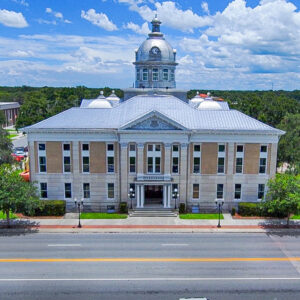
1. The Old Polk County Courthouse
Added to the National Register in 1989, the Old Polk County Courthouse stands as one of Polk County’s most enduring landmarks.
Designed in 1908 in the emerging neoclassical revival style, the courthouse shows the county’s rapid growth. It was expanded in 1926 with perfectly matched wings during the phosphate and Florida land booms.
For nearly eight decades, it served as the heart of local government. It was also where two future national figures began. Attorney Chesterfield Smith and longtime U.S. Senator Spessard L. Holland launched their legal and political careers there.
Preserved with remarkable integrity and beautifully restored in the late 1980s, the building remains a striking example of early 20th century classicism, marked by its monumentality, balanced proportions and restrained ornamentation.
Today, it continues to serve Polk County as the Polk County History Center, home to the historical museum and the historical and genealogical library. Public tours highlighting the distinctive architecture are offered at 11 a.m. on the third Saturday of each month.
2. Old Haines City National Guard Armory
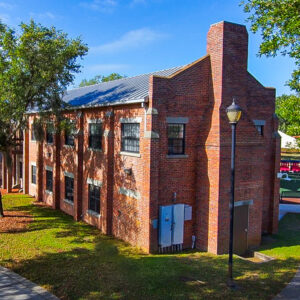
Added to the National Register in 1994, the Old Haines City National Guard Armory is the community’s most significant surviving link to Florida’s state militia and National Guard history.
Built between 1932 and 1935, the new facility replaced an earlier armory that had been lost in a fire. It brought needed jobs during the Depression. It served as headquarters for local Guard units through World War II.
Supported by New Deal funding, the complex grew to include a vehicle storage building, administrative spaces, and recreation areas that reflected both military needs and federal investment in local infrastructure.
From 1920 to 1930, and into the mid-20th century, Haines City Guard units trained for civil defense. They also trained for disaster response. Later, they prepared for overseas combat as part of the 31st Infantry Division.
Used until 1983, the armory remains a clear reminder of the city’s military heritage. It reflects its role in national readiness and the community’s long support for citizen-soldiers.
3. Spook Hill
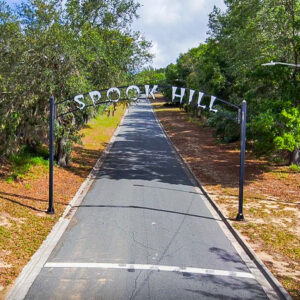
Added to the National Register in 2019, Spook Hill has intrigued visitors since it opened in 1950 in Lake Wales, Florida. This quiet stretch of North Wales Drive is famous for a gravity-defying optical illusion.
It can make cars seem to roll uphill when they are in neutral.
The experience begins at a ghost-themed roadside sign that shares the hill’s evolving legend.
It guides visitors to a painted white line beneath the iconic “SPOOK HILL” archway.
Framed by natural slopes and a clear horizon, the setting creates ideal conditions for the illusion. It also supports the supernatural stories that have shaped the site’s identity for over sixty years.
Though gravity hills exist worldwide, Lake Wales’ Spook Hill stands apart for the rich local lore, community pride and ever-changing signage that have turned a curious natural phenomenon into a beloved piece of Florida folklore.
4. Craney Spec Houses Historic District
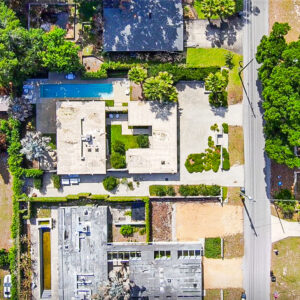
Added to the National Register in 2019, the Craney Spec Houses Historic District in Winter Haven showcases one of Florida’s most distinctive midcentury modern neighborhoods.
Set along one block overlooking Lake Elbert, the district has 10 modern homes. Architect Gene Leedy designed them in 1956. He was a leading figure in the Sarasota School of Architecture. Local developer Richard “Dick” Craney commissioned the homes.
Built on the crest of a former grapefruit grove, these “Mark I” and “Mark II” model homes featured open floor plans. They used exposed structural materials and a bold, minimalist look. This style reflected the optimism and experimentation of the postwar era.
Created during rapid population growth and major social change in Florida, the development aimed to start a modernist community. It was meant to address the region’s urgent housing needs.
Although two homes were extensively altered and Craney never built on one lot, the district still reflects Craney and Leedy’s vision. Together, they turned raw citrus land into a compact showcase of Sarasota School design. It remains a lasting sign of midcentury innovation, community planning, and modern Florida spirit.
5. Auburndale City Hall
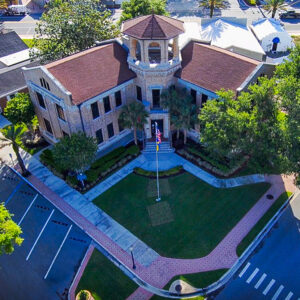
Added to the National Register in 2013, the Auburndale City Hall is a 1927 Italian Renaissance Revival landmark that has served as the civic heart of the community for nearly a century.
Designed by Lakeland architect Rolland C. Buckley, the symmetrical yellow-brick building features an elegant L-shaped layout anchored by a three-story octagonal belfry, cast-stone detailing, tall multi-light windows and finely crafted parapets and pilasters.
From the start, the building was designed to house every essential city function. Offices, council chambers, the public library, and the town’s fire and police departments all operated under one roof. This reflected Auburndale’s rapid growth and rising municipal ambitions in the 1920s.
Over the decades, its rooms have supported everything from library operations and civic meetings to fire department living quarters and public works offices.
Though department needs have changed, and new buildings have grown around it, the Auburndale City Hall remains a hub. It also stands as a preserved sign of the city’s early civic pride and architectural skill.
How Is Polk County, FL Preserving Its Story?
In 2023, the Polk County Board of County Commissioners passed the Polk County Historic Preservation Ordinance, which provides protection for local historic properties in the unincorporated county. The ordinance is the foundation for the Polk County Certified Local Government (CLG) program.
The CLG program ensures collaboration and communication between Polk County, the State of Florida and the Department of the Interior through notification of historic preservation initiatives and programs. It positions Polk County Government as a primary contact for residents and property owners interested in preserving and recognizing historic sites across the county.
If you are interested in adding a historic site to the National Register of Historic Places, contact the Historic Preservation Manager at (863) 534-4385 or visit polkhistorycenter.org.
Legal Disclaimer:
EIN Presswire provides this news content "as is" without warranty of any kind. We do not accept any responsibility or liability for the accuracy, content, images, videos, licenses, completeness, legality, or reliability of the information contained in this article. If you have any complaints or copyright issues related to this article, kindly contact the author above.
